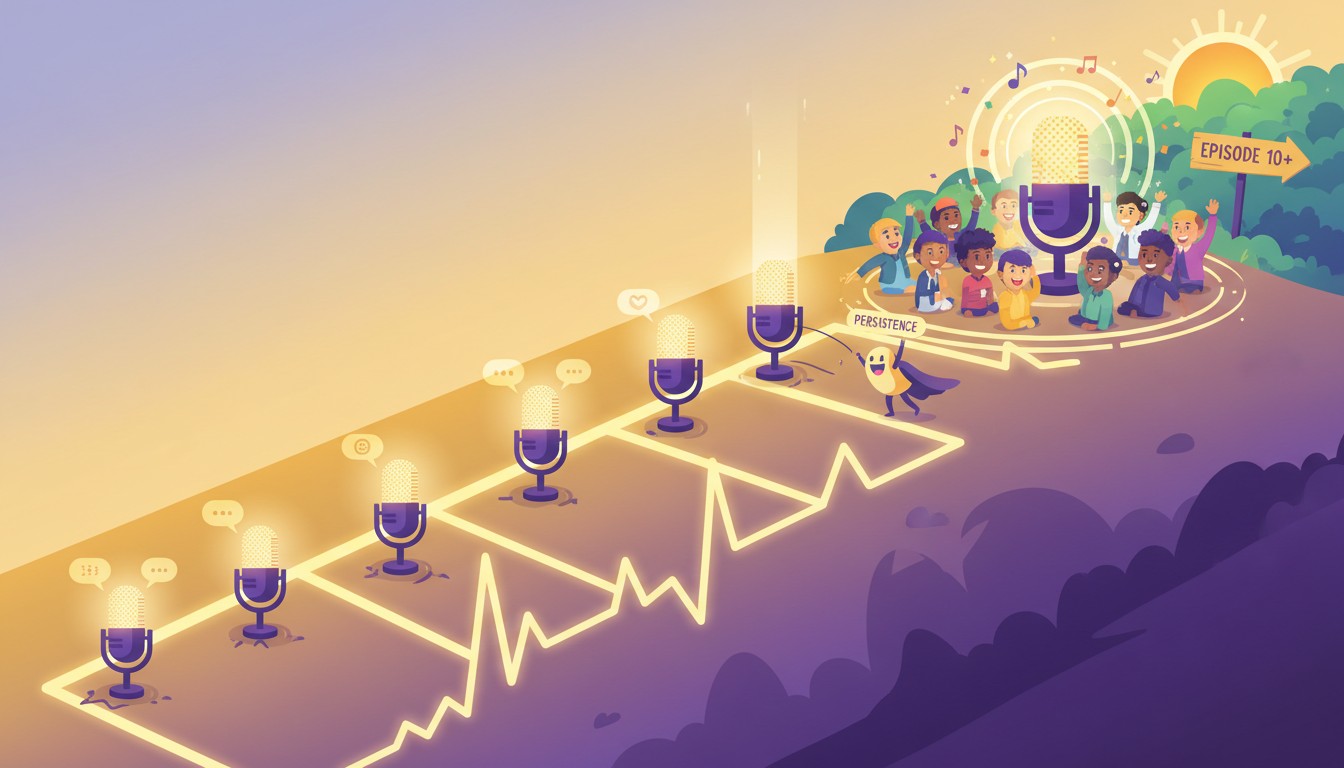
The creative project that promised to change your life ends up abandoned in a digital graveyard of half-finished ideas. According to 2025 podcasting statistics, 44% of podcasts don’t survive past three episodes, and only 8% make it beyond episode ten. Yet thousands of new shows launch every day, their creators intoxicated by visions of viral success, sponsorship deals, and passionate communities. They invest in microphones, design cover art, and record intros—never suspecting they’re walking a well-documented path toward an invisible cliff.
This mass extinction isn’t random. Behind every abandoned RSS feed lies a predictable set of psychological traps, structural barriers, and miscalculated expectations that conspire to turn passion into paralysis. Understanding the 7-Episode Curse doesn’t just explain why most podcasts fail—it provides a survival map for the few creators willing to recognize the pattern and persist through it. The difference between a lasting show and a forgotten one rarely comes down to talent or funding. It comes down to understanding why, exactly, we quit when we do.
The Invisible Architecture: Why Podcasts Vanish in the Dark
Every podcast that dies before episode ten follows a similar trajectory. The first three episodes flow on pure adrenaline—the thrill of creation, the excitement of launch, the validation of seeing your show appear on Spotify. Then reality begins its methodical erosion. By episode four, the preparation feels harder. By episode six, the editing drags into late nights. By episode seven, a critical threshold emerges: the moment when the honeymoon phase collides with the brutal mathematics of sustained effort.
The content creation workload multiplies exponentially. Research that took two hours for episode one now feels exhausting when you realize it must be repeated weekly forever. The “simple” task of booking guests becomes a scheduling nightmare. That editing software you mastered just enough to publish? It reveals deeper layers of complexity with every episode. The compound effect of these micro-frustrations creates a death spiral: each episode takes longer, feels harder, and reaches fewer people than expected.
Most creators enter podcasting wearing every hat: researcher, host, audio engineer, graphic designer, social media manager, and chief marketing officer. Research from 2025 reveals that 70% of solo podcasters handle every aspect of production alone, and 89% have no access to mental health resources tailored for creators. This isolation transforms creative passion into administrative burden. The moment you realize you’re spending more time writing show notes than having conversations—the moment the ratio shifts from creator to clerk—is the moment the curse takes hold.
The Episode Survival Cliff: Where Shows Perish
Episode 3: 44% of podcasts never publish episode 4 (initial enthusiasm evaporates)
Episode 7: The “curse threshold”—where time demands exceed perceived rewards
Episode 10: Only 8% survive this milestone (entering the top tier of persistent creators)
Episode 21: Publishing this many episodes puts you in the top 1% of all podcasts
Episode 50: Just 8.53% of shows ever reach this point (Podmatch data)
The Psychology of Podfade: Why We Quit When We Do
If the 7-Episode Curse is so predictable, why do intelligent, passionate creators keep falling victim to it? The answer lies in a cocktail of cognitive biases, flawed mental accounting, and evolutionary pressures that make sustained creative output one of the hardest psychological challenges we face.
The Effort-Reward Miscalculation
Human brains evolved to seek immediate feedback. A hunter sees the deer fall. A farmer harvests crops after months of predictable seasons. Podcasting offers none of this. You might spend fifteen hours perfecting episode seven, only to gain three downloads and zero comments. This disconnect between effort and visible reward triggers a primal “stop wasting energy” response.
Creators mentally compare their output to national successes they’ve heard, not to the true baseline of podcast mortality. When Edison Research shows the average new podcast receives just 28 downloads per episode in its first month, most creators don’t know this. They expect hundreds, then question their worth when reality falls short.
The Algorithm Anxiety
Platform algorithms create a perverse incentive structure that punishes the very rest creators need to survive. Most podcast directories reward consistency above all else—frequent releases trigger promotion, while gaps signal irrelevance. This creates a treadmill where taking a week off feels like professional suicide.
A 2025 creator mental health study found that 66% of podcasters report stress over content performance, and 62% experience burnout “sometimes or often.” Yet the algorithm doesn’t care about your exhaustion. It cares about your upload date. This mismatch between human needs and platform demands pushes creators to choose between their health and their show’s visibility.
The Identity Collapse
Early podcasting feels like creative expression. By episode seven, it often feels like a job you never applied for. The shift from “I’m a podcaster” to “I’m failing at being a podcaster” happens subtly. When the work stops feeling like passion and starts feeling like obligation, identity-based motivation collapses.
This is compounded by the “invisibility phase”—that long stretch where you’re creating for an audience that doesn’t exist yet. Without external validation, creators internalize silence as failure. The same person who celebrated their first three episodes finds themselves embarrassed by episode eight’s low numbers, creating a shame spiral that makes promotion feel pathetic rather than proud.
The Burnout Crucible: When Passion Becomes Pressure
Creator burnout isn’t a vague feeling of being tired—it’s a specific psychological state that systematically dismantles creative capacity. For podcasters, burnout arrives with distinct warning signs that most ignore until it’s too late. The voice that once felt natural now sounds strained. Research feels like homework. Editing sessions stretch from two hours to six because you keep avoiding them. You start checking analytics obsessively, then stop checking altogether.
A 2025 study of 542 creators revealed that 62% feel burnt out “sometimes or often,” 69% face financial instability, and one in ten reports suicidal thoughts connected to their work—nearly double the national adult rate. The always-on pressure of content creation, blurred work-life boundaries, and platform algorithms that penalize rest create a perfect storm for mental health crisis.
The financial strain compounds the psychological toll. While Libsyn’s research shows only 14% of podcasters earn $1,000 or more per month, most creators expect monetization far sooner. When episode eight arrives without sponsorship offers, the financial math becomes undeniable: you’re working a part-time job that pays pennies per hour. The rational decision is to quit—and most do.
The Solo Creator Trap: Wearing All the Hats
The Host: Prepares questions, researches topics, conducts interviews (3-4 hours)
The Engineer: Records, manages audio levels, troubleshoots tech issues (1-2 hours)
The Editor: Cuts mistakes, adds music, balances sound (4-8 hours)
The Marketer: Writes show notes, creates social posts, engages listeners (2-3 hours)
The Analyst: Checks metrics, strategizes growth, compares to competitors (1 hour)
Total per episode: 11-18 hours of unpaid labor
Real-World Collapse: Podcasts That Died at the Curse
Statistics tell one story; real examples tell another. These anonymized case studies from creator forums illustrate how the 7-Episode Curse manifests in real time.
The Interview Show That Ran Out of Guests
A marketing consultant launched a show interviewing local entrepreneurs. Episodes 1-3 featured her closest friends and colleagues, booked months in advance. By episode 4, she’d exhausted her immediate network. Cold outreach to strangers yielded a 10% response rate, and scheduling across time zones became a nightmare. Episode 7 featured a guest who canceled twice and finally recorded while clearly multitasking. The host published episode 8 three weeks late, with an apology for the delay. Episode 9 never appeared. The RSS feed still exists, a digital fossil frozen in time.
The True Crime Duo Who Became Detectives of Their Own Demise
Two friends launched a true crime podcast with episode zero announcing their “weekly” release schedule. Each episode required 15+ hours of research, scriptwriting, and fact-checking. By episode 5, one host had a new baby; the other changed jobs. They switched to bi-weekly, then monthly. Episode 7 arrived two months late with a tense conversation about “recommitting.” Episode 8 never came. Their Patreon page, which had promised three bonus episodes per month, still has one supporter paying $5 monthly for content that stopped in 2023.
The Business Podcast That Monetized Itself Into Oblivion
A SaaS founder started a podcast to “build authority” and attract clients. Episodes 1-6 focused on valuable advice and saw slow but steady growth. By episode 7, he decided to “monetize” by selling sponsorships to fellow founders. The sponsored episodes required reading lengthy ad copy, which alienated his small but loyal audience. Downloads dropped. The sponsor didn’t renew. For episode 9, he recorded a 45-minute “why I’m quitting” monologue explaining that podcasting “didn’t work for his business model.” The episode was never published; the feed was deleted entirely.
The Compound Effect: How Episode 21 Changes Everything
Here’s the secret that survivors discover: podcasting operates on a compound interest model where the rate of return accelerates dramatically after the curse threshold. The effort required for episodes 1-10 is actually greater than for episodes 21-30, but the perceived reward inverts. Early episodes feel like shouting into a void. Later episodes arrive with momentum, audience habits, and algorithmic trust already established.
Consider the math: reaching episode 21 places you in the top 1% of all podcasts automatically. Not because you’re a genius, but because 99% of creators quit before you. This creates an exponential opportunity. While 1,000 new shows launched the same week as yours, only 80 remain by episode 10. By episode 21, maybe 20 remain. Your “competition” self-selects out of existence. The field clears itself.
The compound effect operates in skills, too. Editing that took you eight hours on episode 5 takes three hours by episode 20. Interviewing feels natural rather than nerve-wracking. You develop a sixth sense for what content resonates. Your voice literally becomes more confident. These improvements don’t happen linearly—they jump dramatically once muscle memory locks in around episode 15.
The Momentum Cascade: What Changes After the Curse
Episode 10-15: Editing speed increases 40-60%, workflow becomes automatic
Episode 15-20: First listener emails arrive, creating motivation feedback loop
Episode 20-25: Algorithmic promotion kicks in (platforms trust consistent creators)
Episode 25-30: Monetization becomes viable (critical mass for sponsors)
Episode 30+: Habit formation locks in for both creator and audience
Practical Strategies: How to Survive the 7-Episode Curse
Surviving the curse requires systems, not just willpower. Here are concrete tactics that separate survivors from statistics.
Build a Content Fortress Before Launch
Record and edit 10 episodes before releasing episode 1. This sounds excessive, but it’s the single most effective survival strategy. Knowing you have a buffer eliminates the panic of the weekly deadline. When life inevitably intervenes—illness, work crises, family emergencies—you can release from your backlog without missing a beat. Batch recording strategies show that creators who batch produce 3-5 episodes per session are 3x more likely to reach episode 20.
Hide Your Analytics Until Episode 20
Data is toxic in the early phase. Checking daily downloads creates an emotional roller coaster that drains creative energy. Use a browser blocker to prevent access to your hosting dashboard. Ask a trusted friend to check monthly metrics and only report significant milestones (like your first 100 downloads). This removes the emotional volatility that kills so many shows.
Redefine Success to Something You Control
You can’t control downloads, but you can control creation. Set process-based goals: “I will publish 20 episodes” instead of outcome-based goals: “I will get 1,000 downloads.” This shift is critical because it moves the locus of control back to you. Every published episode becomes a victory, regardless of metrics. This mindset change alone carries many survivors through the curse.
Gamify Your Production Process
Turn production into a game with clear milestones and rewards. Award yourself points for completing episodes, booking guests, or finishing editing sessions. Set “levels” based on episode count. When you hit episode 10, buy yourself something meaningful. At episode 21, take a weekend trip. This external reward system compensates for the lack of audience feedback in the early phase. Gamification techniques used by long-running shows like Professor Game Podcast have helped creators maintain consistency across 360+ episodes.
The Anti-Curse Checklist: Surviving to Episode 21
Pre-Launch: Record 10 episodes, create 20 guest prospects list, establish backup recording space
Episodes 1-5: Focus on process, not metrics; celebrate each release publicly; build one listener relationship per episode
Ep