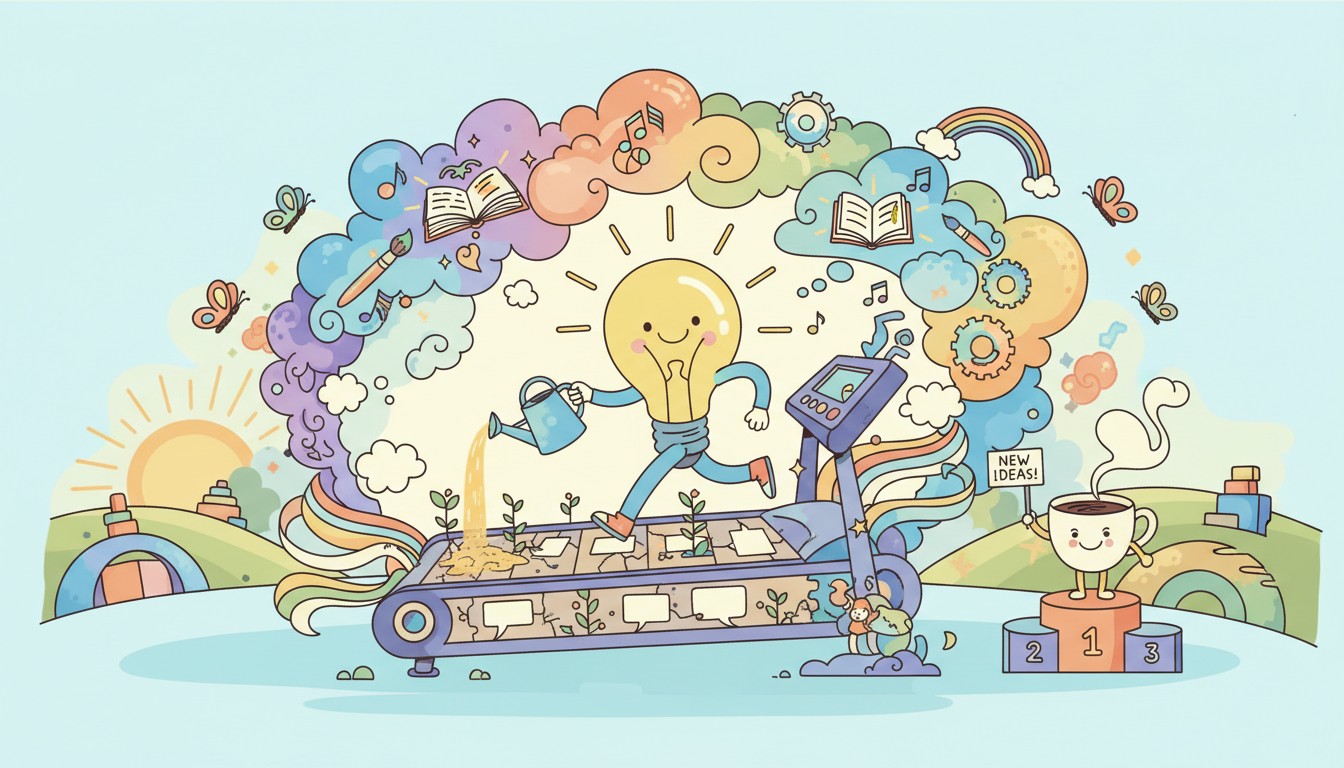
The creative well doesn’t run dry overnight. It happens episode by episode, as you extract ideas without replenishing them. According to 2025 research by Billion Dollar Boy, 52% of content creators have experienced burnout, with creative fatigue cited as the leading cause by 40% of respondents. Among podcasters specifically, that number climbs higher—70% of solo creators report handling every aspect of production alone, transforming creative passion into an unrelenting assembly line of obligations.
The treadmill accelerates with each mile marker. Episode 20 felt like a milestone; episode 25 feels like a millstone. You begin measuring your worth in upload dates rather than impact. The pressure to maintain consistency transforms from a healthy discipline into a creative straitjacket. Understanding how to step off the treadmill without stopping the show isn’t about finding more willpower—it’s about redesigning the machine entirely.
The Invisible Architecture: How Ideas Become Exhaustion
Creative drought isn’t a personal failing—it’s a structural inevitability when output exceeds input. Most creators operate like farmers who harvest every season without ever planting. You spend 10-15 hours per episode researching, recording, and editing, but allocate zero time to creative replenishment. The math doesn’t work, yet we pretend it does until the field is barren.
The content treadmill has three invisible belts that keep you running: the algorithm belt, the audience expectation belt, and the self-worth belt. The algorithm penalizes gaps, teaching you that consistency equals visibility. Your audience develops a habit of your voice, making you fear that silence equals abandonment. And your brain, starved for external validation, begins to believe that output equals value. When these three belts synchronize, stepping off—even for a day—feels like professional suicide.
This is compounded by the “originality trap.” You believe every episode must be a unique snowflake of insight, when in reality, your audience needs you to circle core concepts repeatedly, each time from a slightly different angle. Foundation Marketing research shows that repurposing one episode into multiple formats extends its lifespan by 300%, yet creators resist repeating themes because they feel it reveals their creative poverty.
The Content Debt Cycle: Spending What You Don’t Have
Episode 1-10: Creative surplus—you’re drawing from years of accumulated ideas
Episode 11-20: Creative break-even—you’re spending ideas as fast as you generate them
Episode 21-30: Creative deficit—you’re extracting from an empty well, feeling the strain
Episode 30+: System collapse—either take on creative debt (low-quality episodes) or default (podfade)
The interest rate: Each episode created while depleted requires 2x recovery time
The Psychology of Depletion: Why We Run Dry
Creative exhaustion isn’t just physical tiredness—it’s a specific cognitive state where your brain’s ideation networks literally shut down. Understanding the neuroscience reveals why “just push through” is terrible advice.
The Default Mode Network Collapse
Your brain’s default mode network (DMN) is responsible for spontaneous idea generation—the “shower thoughts” that become brilliant episode concepts. Constant production keeps you in task-positive network mode, where analytical thinking dominates. Without DMN activation, you can’t generate novel connections. You’re not lazy; you’re neurologically locked out of creativity. As creator mental health research shows, 58% of creators say their self-worth declines when content underperforms, creating a feedback loop where anxiety further suppresses DMN activity.
The Decision Fatigue Avalanche
Every episode requires hundreds of micro-decisions: topic angle, guest selection, question order, edit points, music cues, show note keywords. Research shows humans make optimal decisions for about 200-300 choices per day; after that, decision quality plummets. A single podcast episode can consume 100+ decisions. By episode 25, you’re making choices with the cognitive equivalent of being legally drunk—except you can’t tell, because the decline is gradual.
The Input-Output Imbalance
Creators consume far less than they produce. While a novelist might read 50 books while writing one, podcasters often create 50 episodes while “inputting” almost nothing—no reading, no conferences, no unstructured thinking time. This violates a fundamental creative principle: output must be fueled by input. The 43% of creators who report feeling isolated despite being constantly online are starved of the collaborative collisions that spark ideas.
Real-World Exhaustion: When the Treadmill Wins
Creative drought doesn’t announce itself with a dramatic collapse. It manifests in subtle quality erosion, scheduling delays, and the quiet desperation of creators who start hating the work they once loved. These patterns repeat across genres and experience levels.
The Interview Show That Became a Echo Chamber
A business podcast host built his show to 50 episodes by interviewing entrepreneurs. By episode 55, he’d asked the same “origin story” questions so many times he could predict the answers. Guests noticed his declining engagement; he stopped listening to their responses while recording. Episode 58 featured a CEO who later told colleagues, “It felt like he wasn’t even there.” The host took a “short break” after episode 60. Three years later, the RSS feed remains dormant. He’d mastered the format but depleted his curiosity—the true engine of compelling interviews.
The Solo Host Who Scripted Herself Into Silence
A wellness podcaster began scripting episodes word-for-word when she felt her natural speaking ability declining. The scripts grew longer—episode 40’s script was 8,000 words and took 12 hours to write. By episode 42, she couldn’t face the blank page. She announced a “season break” to “reimagine the show.” Her audience, loyal but confused, waited. The break became permanent because she’d built a system that required superhuman effort to maintain. The content treadmill had become a writing marathon she couldn’t sustain.
The News Podcast That Drowned in Its Own Cycle
A daily news commentary show built rapid growth by being first to analyze trending topics. By month four, the host was consuming 6 hours of news daily to prepare for a 20-minute episode. He developed insomnia from screen exposure and began dreaming in headlines. Episode 87 was 8 minutes late and contained three factual errors he’d never have made previously. His audience, trained for daily drops, bombarded him with “Where’s today’s episode?” messages. The pressure to maintain speed crushed his capacity for insight. He quit after episode 90, citing “news fatigue,” but the real diagnosis was creative depletion from relentless input-output cycling.
The Depletion Diagnostic: Are You on Empty?
Rate your agreement with these statements (1 = strongly disagree, 5 = strongly agree):
1. I often publish episodes I know aren’t my best work just to meet a deadline
2. I spend more time dreading content creation than actually creating
3. I can’t remember the last time I consumed content purely for enjoyment (not research)
4. I feel guilty when I’m not working on my podcast, even during personal time
Score 15+? You’re operating on creative fumes. Immediate intervention required.
The Compound Effect: Why Rest Is More Productive Than Production
Here’s the counterintuitive truth: taking strategic breaks from creation creates more value than forcing episodes during a drought. The key is understanding that rest isn’t the absence of production—it’s a different form of production that generates future content.
When you pause to read deeply, have unstructured conversations, or simply exist without content extraction as your goal, your DMN reactivates. Ideas begin to percolate again. The 2-4 weeks you “lose” to recovery generate enough material for 10-15 future episodes. Conversely, the episodes you force out while depleted have 40% lower listener retention and increase your risk of permanent creative damage.
Consider the ROI: one month of intentional input (reading, conferences, conversations, rest) yields 3-4 months of quality output. One month of forced creation while depleted yields 4 weeks of mediocre content plus 3 months of recovery time. The math is undeniable, yet we choose the second path because the algorithm rewards immediate consistency over sustainable quality.
The Strategic Pause Framework: When and How to Stop
Episode 15-20: Schedule a “content sabbatical”—one week off every 10 episodes for deep input
Episode 21-30: Implement “seasons” with 2-4 week breaks between them for systemic recovery
Episode 30+: Shift from weekly to bi-weekly, using the extra time for richer production and research
Permanent: Batch create 3-5 episodes per session, then take genuine time off before the next batch
Practical Strategies: Building a Sustainable Content Engine
Escaping the treadmill requires systems, not inspiration. These tactics transform creation from a sprint into a relay race where rest is built into the baton pass.
Repurpose or Perish
Your best content isn’t what you haven’t created yet—it’s what you’ve already created that nobody saw. According to Foundation Marketing’s analysis, repurposing one episode into blog posts, social clips, audiograms, and email content extends its reach by 300% and creates weeks of material from a single conversation. When you have nothing new to say, say the old thing in a new format. Your episode 12 blog post will reach an entirely different audience than the original audio.
Batch and Breathe
Record 3-5 episodes in one intensive day, then take a genuine week off. This approach leverages momentum—your setup is ready, your mic technique is warmed up, your creative juices are flowing. Creating five episodes in one day is more efficient than one episode across five days. The key is honoring the “breathe” part: truly disconnect after the batch, trusting that your consistency is maintained by the stored episodes.
Transparent Drought Communication
When you’re empty, tell your audience. Release a 10-minute “state of the show” episode admitting you’re depleted and taking a strategic pause. This radical honesty performs surprisingly well—it validates listeners’ own struggles and builds deeper loyalty than a forced, mediocre episode. The Podsqueeze platform data shows that transparent “maintenance episodes” retain 85% of normal listenership while giving creators critical recovery time.
The Audience Attribution Flip
Shift from “I create for my audience” to “My audience creates with me.” Release a “listener questions” episode where you answer submitted questions. Host a live brainstorming session. Invite listeners to share their stories on a theme. This transfers the creative burden from your isolated brain to the collective intelligence of your community, while paradoxically strengthening the community bond.
The Treadmill Is Optional
The content treadmill feels mandatory because the algorithm, your audience, and your own ambition tell you it is. But the most successful creators aren’t the ones who run fastest—they’re the ones who built pause buttons into their machines. They understand that a podcast isn’t a sprint to be won; it’s a lighthouse to be maintained, and even lighthouses need their bulbs changed.
Your creative drought isn’t a sign that you’re failing. It’s a sign that your brain is faithfully reporting its fuel levels. Listen to it. The episodes you don’t force create space for the episodes that will eventually matter. The question isn’t whether you can keep running—it’s whether you’re willing to stop long enough to remember why you started.
Step off. The treadmill will still be there when you’re ready. And when you return—rested, refueled, and reconnected to your why—you’ll discover something remarkable: the best episodes come not from grinding harder, but from living fully enough to have something worth saying.
Key Takeaways
Creative drought is structural, not personal—it’s the inevitable result of output exceeding input without systemic replenishment.
52% of creators experience burnout, with 40% citing creative fatigue as the primary driver, yet most continue producing through depletion.
The brain’s Default Mode Network requires rest to generate ideas; constant production locks you in analytical mode, preventing creative connections.
Strategic pauses generate higher ROI than forced creation—one month of input can fuel 3-4 months of quality output.
Sustainable systems (batching, repurposing, transparent communication, audience collaboration) beat willpower every time in preventing creative collapse.